


Track political Facebook ad campaigns for free with Ad Observatory
What ads are campaigns being run on Facebook? When? Where? By whom?
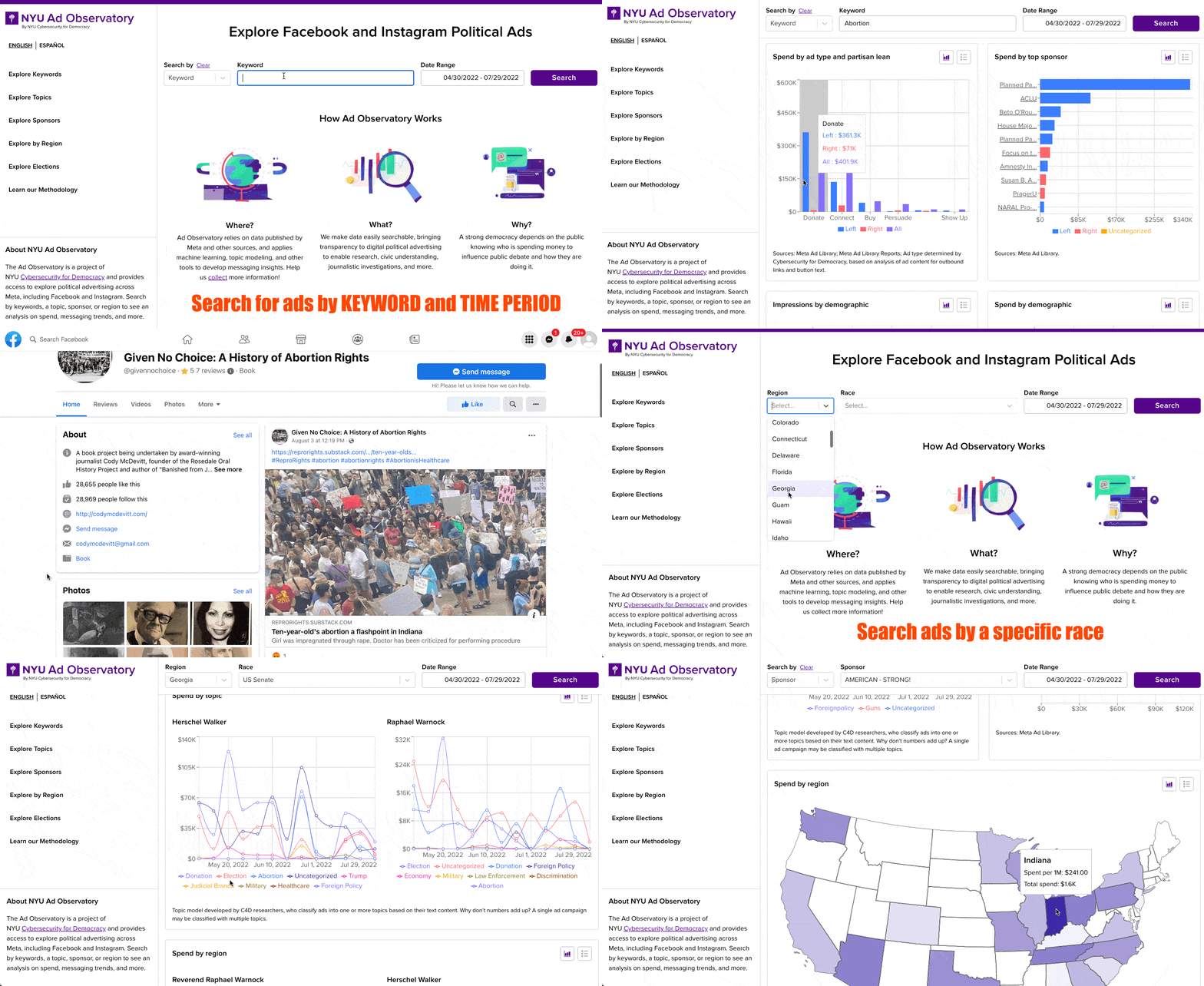
Explore political advertising across Facebook and Instagram with the free Ad Observatory app from the NYU Cybersecurity for Democracy. You can search by keywords, topic, sponsor, or region. We tried it out to analyze:
- What ads for abortion rights were getting the most traction?
- What messages are being pushed in the Georgia senatorial race?
- Which groups are advertising messages related to guns?
“The lack of transparency on political advertising on Meta and other digital platforms means that the public is vulnerable,” said C4D co-director Damon McCoy. “Ad Observatory shines some light to find these weak spots and suggest ways to make online spaces safer.” – Medium
How to use Ad Observatory

Fight disinformation with transparency
Democracy depends on people knowing who is spending money to influence public debate and how they are doing it. The Ad Observatory meets this need by making data easily searchable, bringing transparency to digital political advertising to enable research, civic understanding and journalistic investigations.
- Keywords – see the ads being run which include a specific keyword, such as ‘abortion’ in this case study for instance. Search topics such as “immigration,” “abortion,” and “guns” to find the top digital advertisers emphasizing these themes, as well as other insights. Perhaps you’re interested in seeing how advertisers are spending on ads about immigration, whether that spending is going up and down, and what proportion of spending is by left-leaning and right-leaning groups. Not only that, you want all the ads about immigration, even if they don’t mention that word — immigration — but instead use an alternate term or phrase, such as “caravan” or “secure our border” or “sanctuary city.”
- Topics – search for ads by topic such as dark money, disinformation, election, addiction, guns, healthcare, immigration… We used the term ‘guns’ in this case study.
- Elections – Look for ads specific to an election like the Georgia Senate race. Searching by election will return results showing how federal candidates are spending advertising dollars. Compare and contrast how much candidates are spending compared to each other, and how they are focusing their strategies.

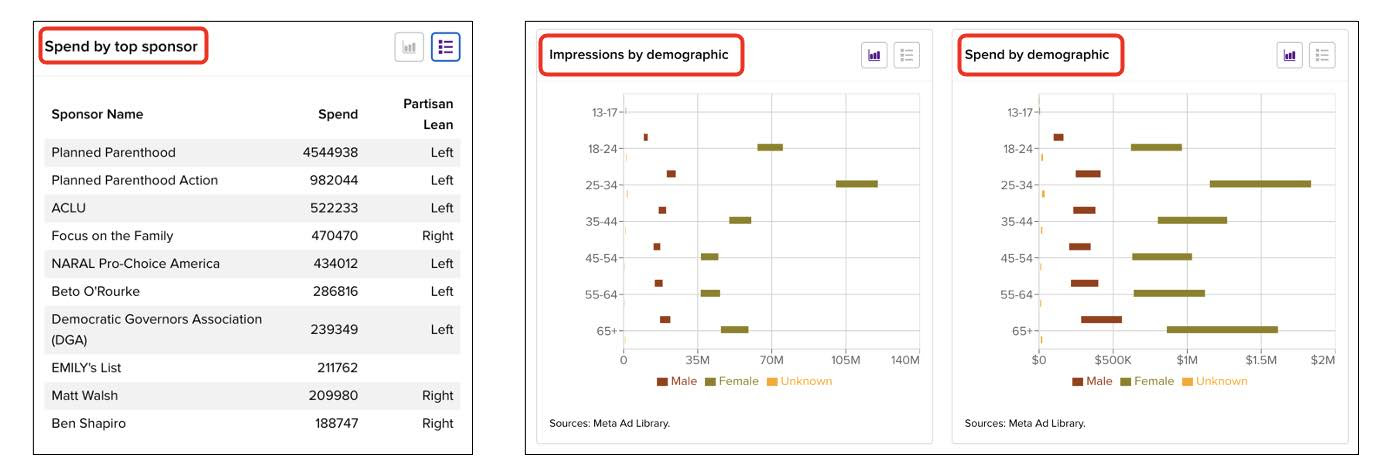
- Sponsors – see who is running an ad campaign as the same group might be running many ads.
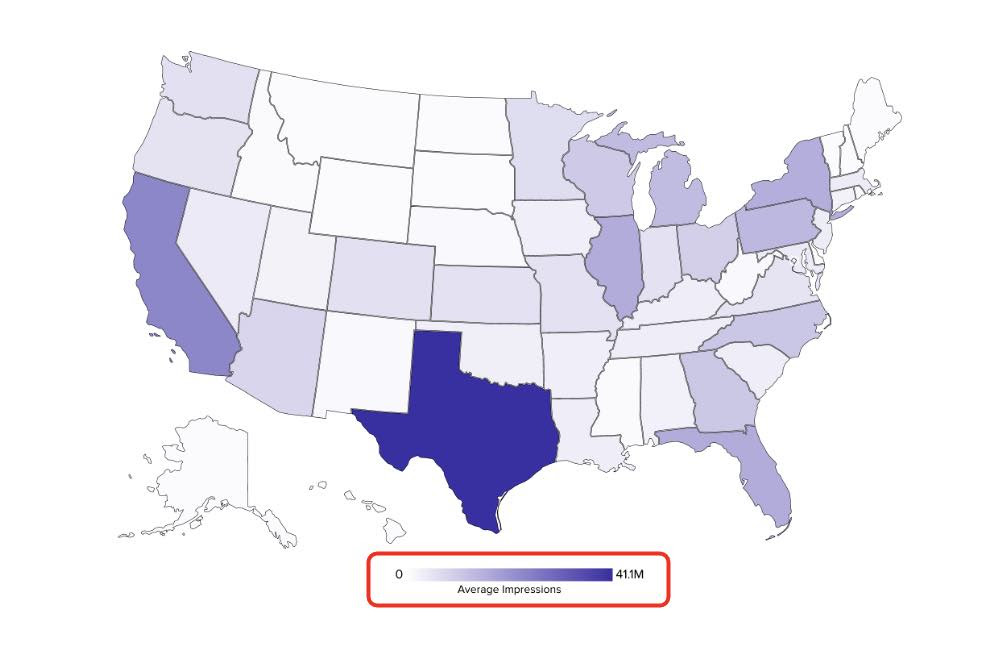
- Region – see where the ads are being run. In this case study you can see where Herschel Walker and Reverend Raphael Warnock’s campaigns are running ads on Facebook. 4) Close up by region: who is running ads in Arizona, Florida, and other places. Search by region to see top advertisers in a particular place. See top sponsors chart, as well as other data visualizations showing how digital advertisers are focusing strategy in a particular state or region.

Analyze ads being run
It helps to know the nature of the ads being run to see the messages that are being emphasized. Ad Observatory lets you see individual ads and also filter them by:
- Ads that are being run the most often (call ad impressions)
- Ad with images, memes, videos
- Ads in English or Spanish
- Ads being run on Facebook, Instagram, Audience Network or Messenger

Political disinformation in Spanish
In recent elections, political advertisers have increasingly turned to digital platforms, such as Facebook, Instagram, YouTube, and TikTok, to influence voters; in 2020, one out of five campaign dollars was spent on digital ads. In the absence of mandated transparency, the public remains vulnerable to decisions by private platforms on what information they make public and how they do it.
“The lack of transparency on political advertising on Meta and other digital platforms means that the public is vulnerable in ways that we don’t even understand sufficiently,” said C4D co-director Damon McCoy. “With Ad Observatory we’re shining some light in corners so that researchers and journalists can find these weak spots and suggest ways to make online spaces safer.”
“We know that in 2020, Spanish-language political misinformation popped up as a major problem on digital platforms, but that most transparency tools (including ours) were not built to be able to capture it.” said Laura Edelson, co-director of NYU Cybersecurity for Democracy, and postdoctoral researcher in Computer Science at NYU’s Tandon School of Engineering. “With this new version of Ad Observatory, journalists and researchers can track and analyze trends with both English and Spanish-language political ads.” – Medium
Cybersecurity for Democracy
Center for Cybersecurity at the NYU Tandon School of Engineering is a research-based, nonpartisan, and independent effort to expose online threats to our social fabric and ways to counter them. It uses traditional cybersecurity methods to evaluate vulnerabilities of online platforms that are used to spread misinformation. They reveal the ways that online sites leave themselves open to misinformation attacks and develop mitigation strategies to improve online security, working with advocates, policy makers, and platforms. Platforms such as Facebook, Twitter, and YouTube–have proven vulnerable to misinformation aimed at weakening democratic norms with algorithmic amplification and micro-targeted content.
Who funds Ad Observatory?
Democracy Fund works toward an open and just democracy that is resilient in the face of change and worthy of the American people’s trust. We support partners and ideas from across the political spectrum in pursuit of a vibrant and diverse public square, free and fair elections, effective and accountable government, and a just and inclusive society.
Media Democracy Fund is a catalyst for an open, secure and equitable internet. We bring together diverse voices to design inclusive and responsible solutions, and empower public interest advocates to create an environment where digital technologies and the internet have a long-term, positive impact on society.
National Science Foundation is an independent federal agency created by Congress in 1950 “to promote the progress of science; to advance the national health, prosperity, and welfare; to secure the national defense…”
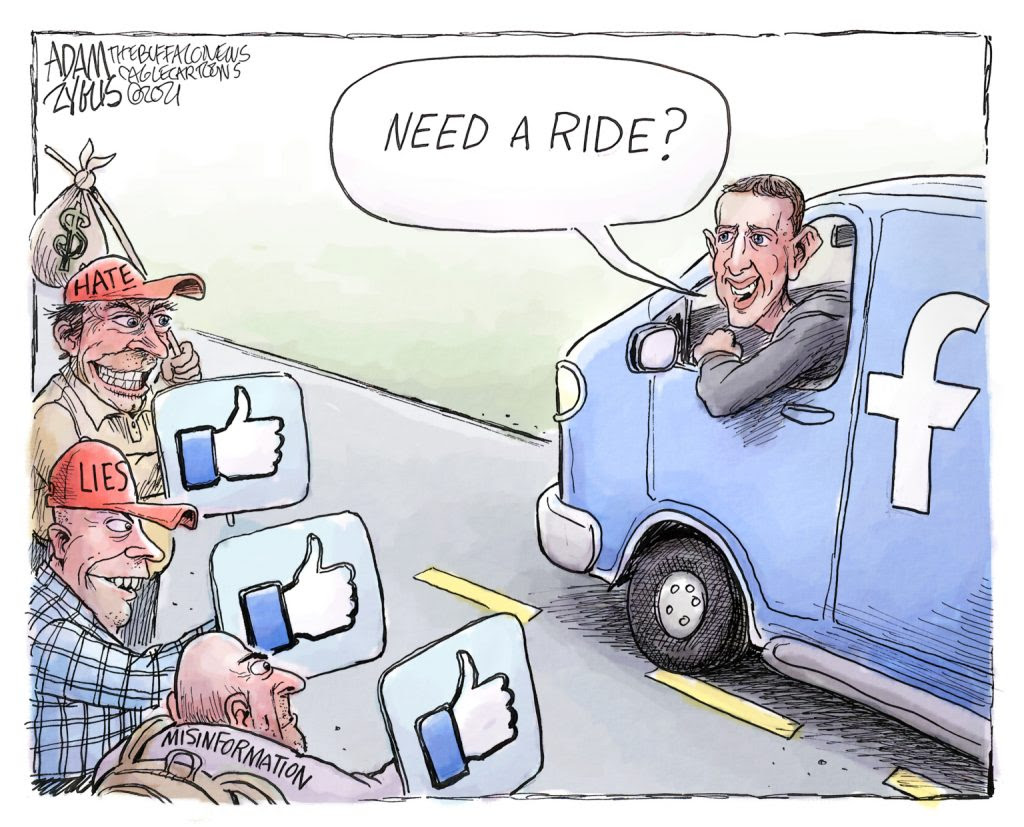
Facebook sued for selling personal data
Facebook is accused of stalling news about how it mis-used data while four Facebook directors – Mark Zuckerberg, Sheryl Sandberg, Marc Andreesen and Peter Thiel sold billions of their Facebook holdings before the stock price slumped. Retirees and regular Facebook shareholders faced billions in losses when news of the scandal became public. Zuckerberg sold 85 million shares of Facebook stock, amounting to $9.6 billion during that time—approximately 20% of his Facebook holdings. Sandberg sold 18 million shares of their Facebook holdings respectively during the time period.” – Tech Policy Press

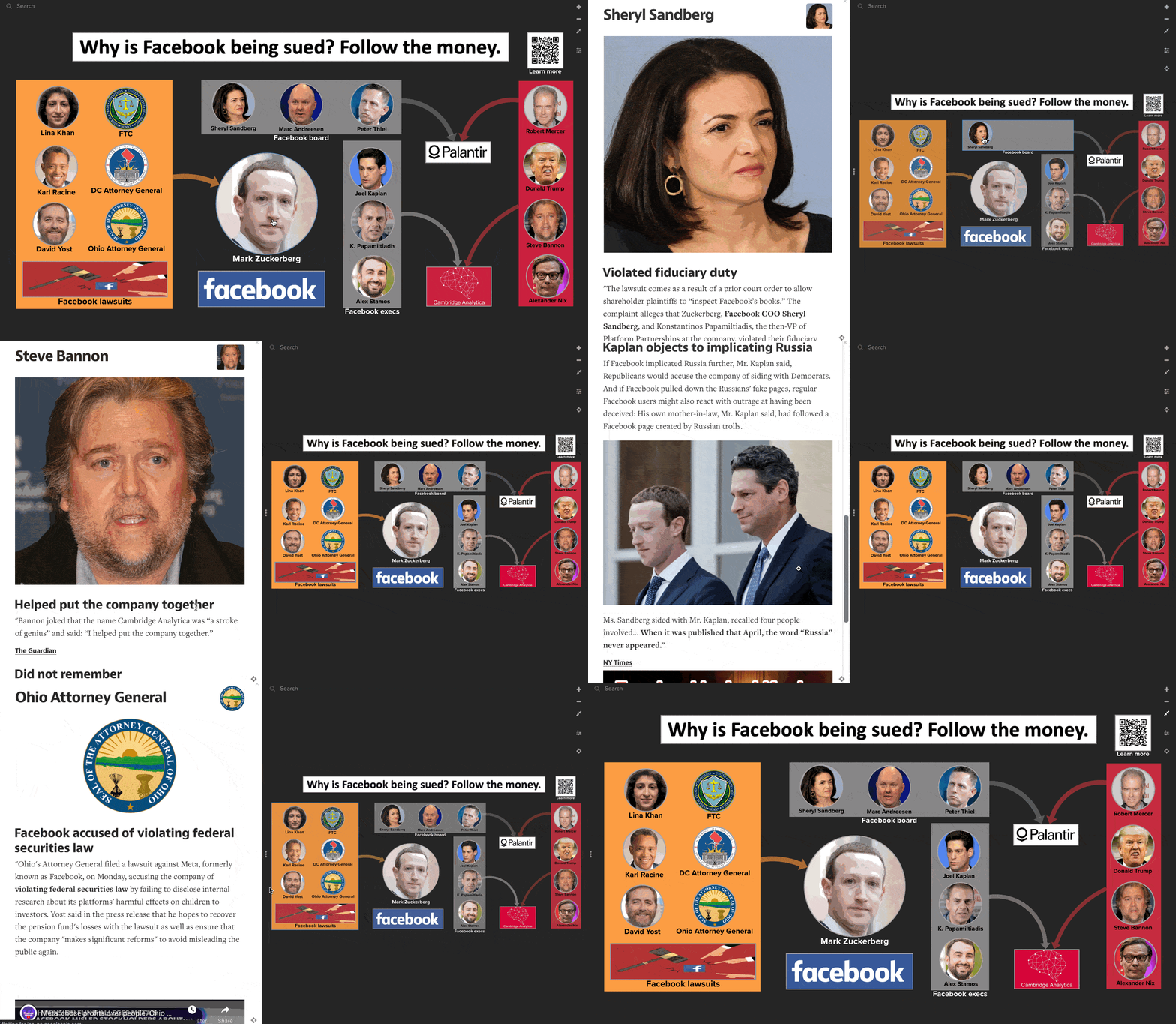
“The complaint alleges that Zuckerberg, Facebook COO Sheryl Sandberg, and Konstantinos Papamiltiadis, the then-VP of Platform Partnerships at the company, violated their fiduciary duty to Facebook’s shareholders. The plaintiffs allege that board members possessed non-public information that allowed them to make insider decisions…
“Ohio Public Employees Retirement System and Facebook investors collectively lost more than $100 billion in market share since employee-turned whistleblower Frances Haugen first leaked internal documents to the Wall Street Journal. “Facebook said it was looking out for our children and weeding out online trolls, but in reality was creating misery and divisiveness for profit. We are not people to Mark Zuckerberg, we are the product and we are being used against each other out of greed” – Business Insider
TakeAway: Track ad campaigns being run on Facebook.
Deepak
DemLabs
DISCLAIMER: ALTHOUGH THE DATA FOUND IN THIS BLOG AND INFOGRAPHIC HAS BEEN PRODUCED AND PROCESSED FROM SOURCES BELIEVED TO BE RELIABLE, NO WARRANTY EXPRESSED OR IMPLIED CAN BE MADE REGARDING THE ACCURACY, COMPLETENESS, LEGALITY OR RELIABILITY OF ANY SUCH INFORMATION. THIS DISCLAIMER APPLIES TO ANY USES OF THE INFORMATION WHETHER ISOLATED OR AGGREGATE USES THEREOF.






Reposted from Democracy Labs with permission.