


Protect kids from lead poisoning: Storytelling with a purpose

11 million Americans suffer from lead poisoning.
Millions of people consume drinking water from lead pipes and the agency said tighter standards would improve IQ scores in children and reduce high blood pressure and heart disease in adults. Cities must replace harmful lead pipes within 10 years under new Biden administration plan. The Environmental Protection Agency on Thursday proposed the strongest overhaul of lead in drinking water rules in more than three decades. – ABC
Now that is a BFD! How do you explain the dangers of lead poisoning? Which counties have the most exposure to lead poisoning? Help people understand the danger that lead contaminated water poses for their kids and what they can do about it? How can the danger and President Biden’s plan be explained in seconds? In an interactive form that can be easily shared on social media and read on a phone, tablet or laptop.
Take a look at this infographic designed with the free Kumu and EZGIF apps and read on for an overview of effective digital storytelling.
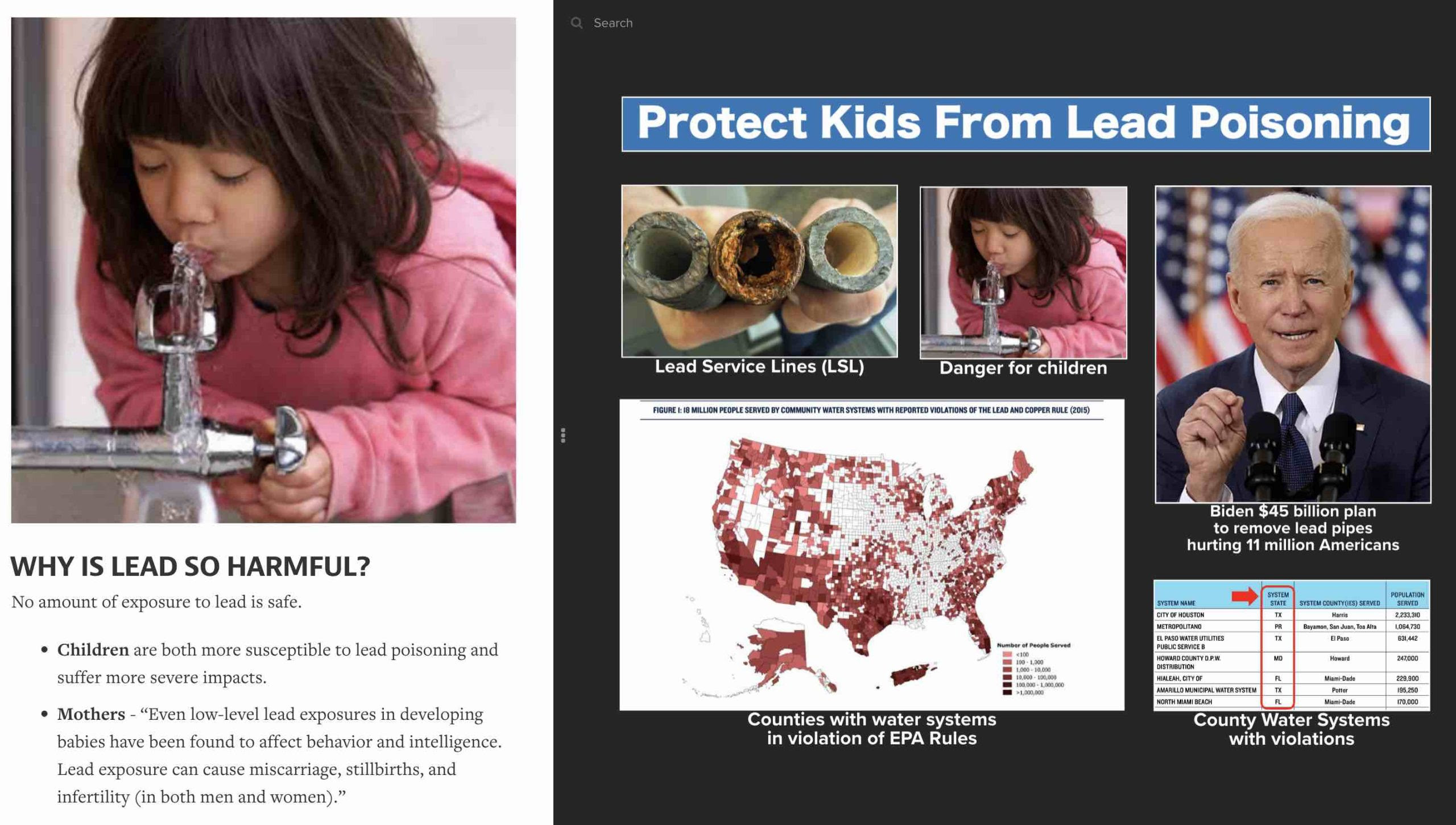
“Millions of people consume drinking water from lead pipes and the agency said tighter standards would improve IQ scores in children and reduce high blood pressure and heart disease in adults. It is the strongest overhaul of lead rules in more than three decades, and will cost billions of dollars.
Lead pipes connect water mains in the street to homes and are typically the biggest source of lead in drinking water. They are most common in older, industrial parts of the country. Lead crises have hit poorer, majority-Black cities like Flint especially hard, propelling the risks of lead in drinking water into the national consciousness. Their impact reaches beyond public health. After the crises, tap water use declined nationally, especially among Black and Hispanic people. The Biden administration says investment is vital to fix this injustice and ensure everyone has safe, lead-free drinking water.” – CNBC
Tips for better digital storytelling
Start with the assumption that people are busy and not interested in your artiCLe. They may not even know about your content. Good storytelling increases the chances of readers finding your article, and delivering you in a content in a form that’s easy to understand and share. Follow these ten tips to get started.
1. Use short catchy titles
2. Use images to attract attention
3. Add QR Codes so readers can quickly read your article on a phone

4. Make it easy for readers to quickly grasp key points, even if they do not read the full article. Put key points of your story upfront, not at the end.

5. Make it easy for readers to find the information they are looking for. Use a search bar to help them find material by keyword. This infographic was created with the free Kumu app which provides a built in search bar.

6. Highlight the information that you want readers to focus on while presenting a lot of data.

7. Include a GIF of your article to provide a quick preview of the content without having to click on anything. EZGIF is a free app that lets you create such GIFs.
8. Use a short URL with words that accurately describe your article. This makes it easier for search engines to find and share your article.
9. Include keywords to describe your article for better search engine optimization (SEO)
10. Include ALT-TEXT descriptions for images in your article for better SEO results.


TakeAway: Learn to storytell better to explain vital issues such as protecting kids from lead poisoning.
Deepak
DemLabs
Share this interactive map with this link https://embed.kumu.io/ac893b4b6d3ca39b4ecb8a5ca407536d
Tips for better storytelling
DISCLAIMER: ALTHOUGH THE DATA FOUND IN THIS BLOG AND INFOGRAPHIC HAS BEEN PRODUCED AND PROCESSED FROM SOURCES BELIEVED TO BE RELIABLE, NO WARRANTY EXPRESSED OR IMPLIED CAN BE MADE REGARDING THE ACCURACY, COMPLETENESS, LEGALITY OR RELIABILITY OF ANY SUCH INFORMATION. THIS DISCLAIMER APPLIES TO ANY USES OF THE INFORMATION WHETHER ISOLATED OR AGGREGATE USES THEREOF.
Read in browser »
Reposted from Democracy Labs with permission.


